

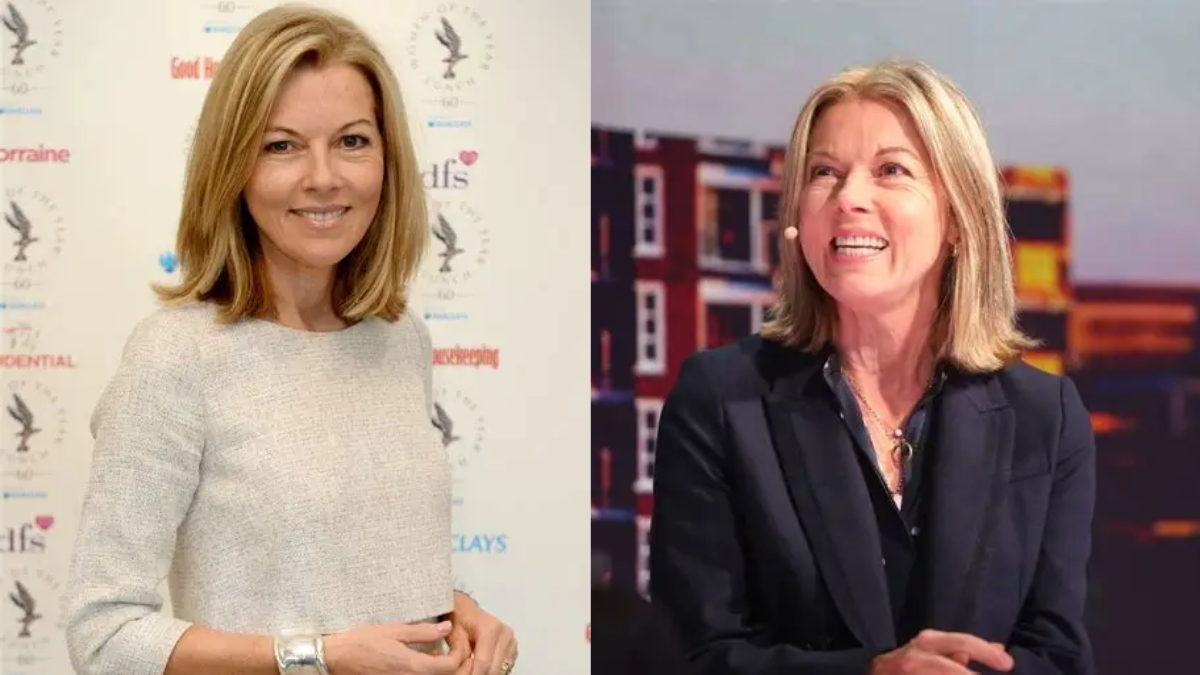
Searches for “Mary Nightingale illness” have increased as viewers look for information about the ITV News presenter and questions surrounding her health. However, online information about the subject is inconsistent, and some websites have published specific medical claims without providing reliable evidence to support them.
So, what is actually known about Mary Nightingale’s health?
At present, there is no reliable public evidence that confirms a specific serious illness or medical diagnosis affecting Mary Nightingale. Claims circulating online should therefore be treated carefully unless they can be traced to a direct statement from Nightingale, ITV, her representatives, or another reputable source.
Who Is Mary Nightingale?
Mary Nightingale is an English journalist and television presenter who has been a familiar face on ITV News for many years. She has presented the ITV Evening News and has reported and interviewed people involved in some of the UK’s most significant news stories.
ITV’s own material describes Nightingale as an ITV News journalist and presenter. She has also spoken publicly about her career and some of the major stories she has covered during her time in broadcasting.
Her long career means viewers have become familiar with her appearance and voice, which can sometimes lead to online speculation when viewers notice changes in a television presenter’s appearance or delivery.
Is Mary Nightingale Illness?
There is currently no reliable confirmation of a specific serious illness that can be attributed to Mary Nightingale.
A number of websites have published articles claiming that she experienced particular health problems. Some have gone further and presented specific diagnoses as established facts. However, the existence of several articles repeating a claim does not necessarily make the claim reliable.
For a medical statement about a public figure to be treated as confirmed, there should ideally be a credible source behind it, such as:
- A direct statement from the person
- An interview in which the person discusses the condition
- An official statement from their employer or representative
- A reputable news organisation reporting verifiable information
- A reliable primary source
Without that evidence, it is better to describe the information as unverified rather than present it as fact.
What About Claims About Mary Nightingale’s Voice?
Some online discussions have focused on Nightingale’s voice and whether she has experienced a throat or vocal problem.
There are viewer discussions online in which people have commented on changes in her voice or wondered whether she was experiencing a health issue. However, viewer observations are not medical evidence and cannot establish a diagnosis.
This distinction is important.
A television viewer might notice that a presenter sounds different on a particular evening, but there can be many possible explanations. A temporary voice change could be related to ordinary circumstances such as tiredness, a cold, allergies, vocal strain or other temporary factors. It would be inappropriate to diagnose someone based only on how they sound on television.
Therefore, claims that Mary Nightingale has a particular throat or vocal-cord condition should not be presented as confirmed unless supported by a reliable source.
Does Mary Nightingale Have Cancer?
There have also been online claims linking Mary Nightingale to cancer.
However, I could not find reliable primary evidence confirming that Mary Nightingale has been diagnosed with cancer.
Some websites have published very specific claims about cancer diagnoses, treatment and recovery, but those reports do not by themselves establish that the claims are true.
This is particularly important with health-related content because repeating an unsupported diagnosis can turn an online rumour into something that appears to be a fact.
A responsible article should therefore avoid stating that Nightingale has cancer unless an authoritative source confirms it.
Why Are There So Many Different Claims?
One reason celebrity health rumours can become confusing is that one unsupported article can be copied or rewritten by several other websites.
For example, one site might publish an article claiming that a celebrity experienced a particular health problem. Another site may then repeat the same claim without checking the original source. Eventually, multiple websites may appear to confirm the story even though they all originate from the same unsupported information.
This creates the illusion of independent confirmation.
For readers, the better question is not:
“How many websites are saying this?”
It is:
“Where did the original information come from?”
That is especially important when an article involves someone’s medical history.
Mary Nightingale’s Career Has Continued
Another useful piece of context is Nightingale’s continuing work in television news.
ITV has continued to feature her in its news programming, and 2026 broadcasts show her continuing to present the ITV Evening News.
That does not prove that someone has never experienced a health problem. People can work while managing many different health circumstances.
However, it does provide important context when evaluating online claims suggesting that she has disappeared permanently from television because of a serious illness.
There is no basis for turning a temporary absence, a change in appearance or a viewer observation into a medical diagnosis.
The Mary Nightingale Deepfake Incident
Interestingly, Nightingale has previously been the subject of another type of online misinformation.
In February 2024, a manipulated video featuring a fake version of Mary Nightingale appeared on social media. ITV later reported that the presenter was angry after discovering that her likeness had been used in an AI-generated deepfake.
The incident is relevant when considering online claims about Nightingale because it demonstrates that content using her name, image or likeness is not necessarily genuine.
The problem is broader than one television presenter. AI-generated and manipulated content can make it increasingly difficult for readers to determine whether an image, video or statement involving a public figure is authentic.
For that reason, readers should be particularly cautious when a health claim appears only on an unfamiliar website, social-media post or unattributed video.
What Has Mary Nightingale Publicly Said About Her Health?
Based on the reliable sources reviewed for this article, there is not enough authoritative information to state that Mary Nightingale has a particular diagnosed illness.
That does not mean that she has never experienced an ordinary health problem. It simply means that there is insufficient reliable public evidence to identify a specific condition.
It is also important to respect the distinction between a public person’s professional life and their private medical information.
Being a television presenter does not mean that every aspect of a person’s health becomes public information.
Why Readers Should Be Careful With Celebrity Health Searches
Searches for celebrity illnesses can produce large amounts of information very quickly. Unfortunately, the information is not always equally reliable.
A good rule is to look for:
Primary evidence:
Has the person actually discussed the condition?
Reliable reporting:
Has a respected news organisation independently reported it?
Official information:
Has the person’s employer, representative or official account confirmed it?
Specific sourcing:
Does the article explain exactly where its medical information came from?
If the answer to these questions is no, the information should be treated cautiously.
Mary Nightingale’s Recent Professional Work
Rather than focusing only on unverified health rumours, readers interested in Nightingale can also look at her ongoing journalism career.
She has spent decades working in television news and has covered major national and international stories. ITV has published her reflections on significant assignments, including her reporting involving Kate and Gerry McCann following the disappearance of their daughter Madeleine in 2007.
She has also discussed changes in television news and her long career with ITV. In a 2022 ITV interview, she reflected on two decades at the network’s news desk and the changes taking place within ITV News.
These first-hand and official sources provide considerably stronger material for understanding Nightingale than unsupported health claims found on biography websites.
The Bottom Line on Mary Nightingale’s Illness
The safest conclusion is straightforward:
There is currently no reliable public confirmation establishing that Mary Nightingale has a specific serious illness.
Various websites and social-media users have made claims about her health, including claims involving her voice and other medical conditions. However, these claims should not be treated as confirmed simply because they appear on multiple websites.
Until Mary Nightingale herself, ITV, her representatives or another authoritative source provides confirmation, readers should regard specific medical claims as unverified.
This distinction matters because health information is sensitive, and publishing an unsupported diagnosis about a real person can cause unnecessary harm.
Frequently Asked Questions
What illness does Mary Nightingale have?
There is no reliably confirmed public information establishing that Mary Nightingale currently has a specific serious illness.
Does Mary Nightingale have cancer?
I could not find reliable primary evidence confirming that Mary Nightingale has cancer. Online claims should therefore not be presented as an established diagnosis.
Has Mary Nightingale had problems with her voice?
Some viewers have discussed changes in her voice online, but viewer observations do not establish a medical diagnosis. There is insufficient reliable evidence to identify a particular vocal condition.
Is Mary Nightingale still working for ITV?
Yes. ITV continues to feature Mary Nightingale in its news coverage, and 2026 broadcasts show her continuing to present the ITV Evening News.
Why are people searching for “Mary Nightingale illness”?
The search appears to be driven partly by online discussions and articles making claims about her health. However, the reliability of those claims varies considerably, so readers should check the original evidence rather than relying on repeated online statements.
Where can I find reliable information about Mary Nightingale?
ITV’s official website and reputable interviews or news reports are better sources than anonymous biography websites or unsourced social-media posts.
Final Thoughts
Mary Nightingale has spent decades in television journalism, making her a recognisable figure to millions of viewers. That visibility naturally creates interest in her personal life, including her health.
However, interest should not be confused with evidence.
At the time of writing, there is no reliable public evidence confirming a specific serious illness affecting Mary Nightingale. Claims that identify a particular diagnosis should therefore be treated with caution unless supported by a credible primary source.
For readers searching for “Mary Nightingale illness,” the most responsible answer is not to repeat the loudest rumour. It is to separate what is documented from what remains unverified.
[…] Kenzie Ziegler Broadway Debut Everything to Know About Her Role in & Juliet Mary Nightingale Illness What Is Known About Her Health in 2026? […]
[…] Who Is Gianetta Fluent? What We Know About Justine Bateman’s Daughter Sage Camp Rock 3 Who Is She and What to Know About the New Character Kenzie Ziegler Broadway Debut Everything to Know About Her Role in & Juliet Mary Nightingale Illness What Is Known About Her Health in 2026? […]
[…] The competition is therefore better understood as a new stage in an existing journalism career. […]